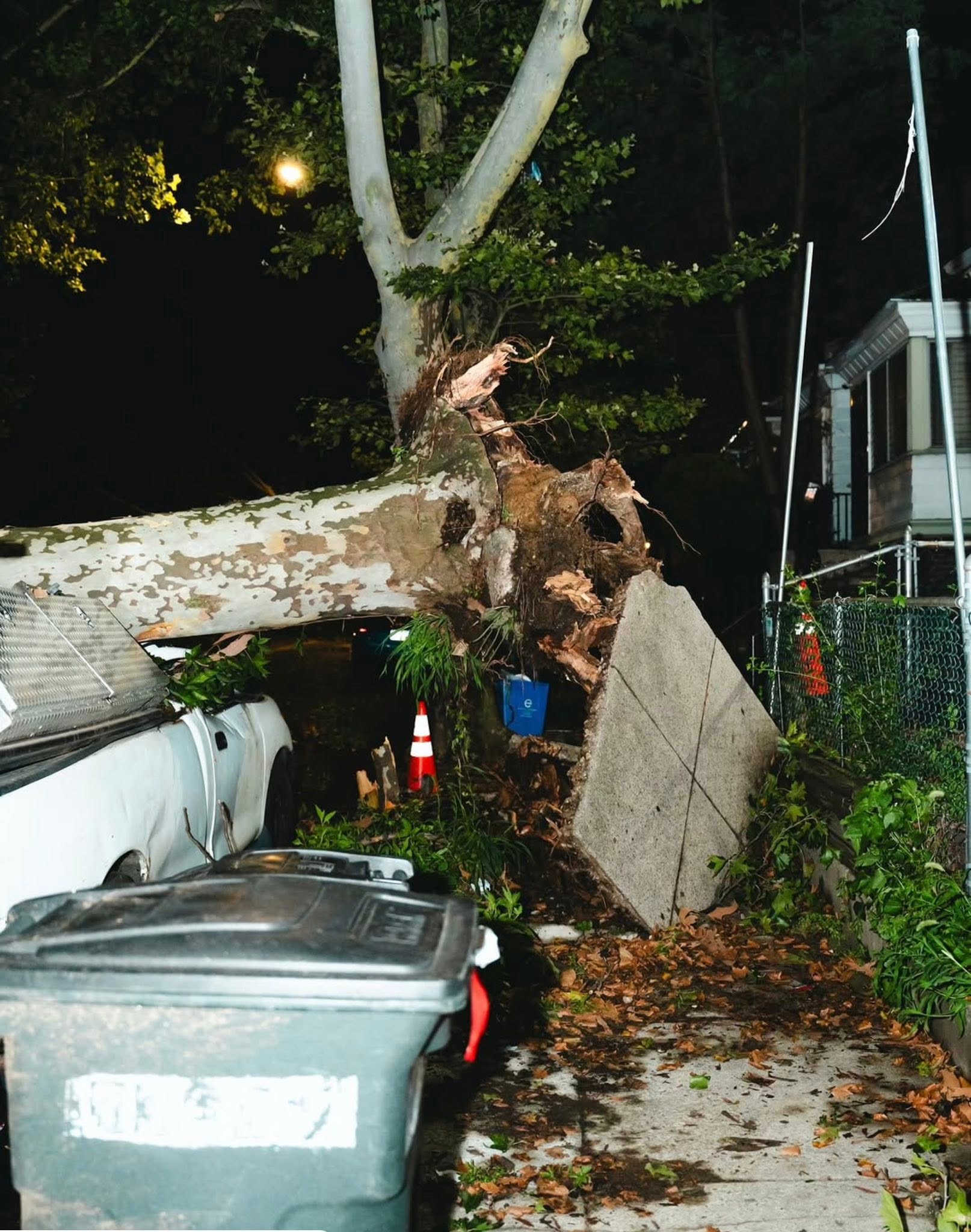
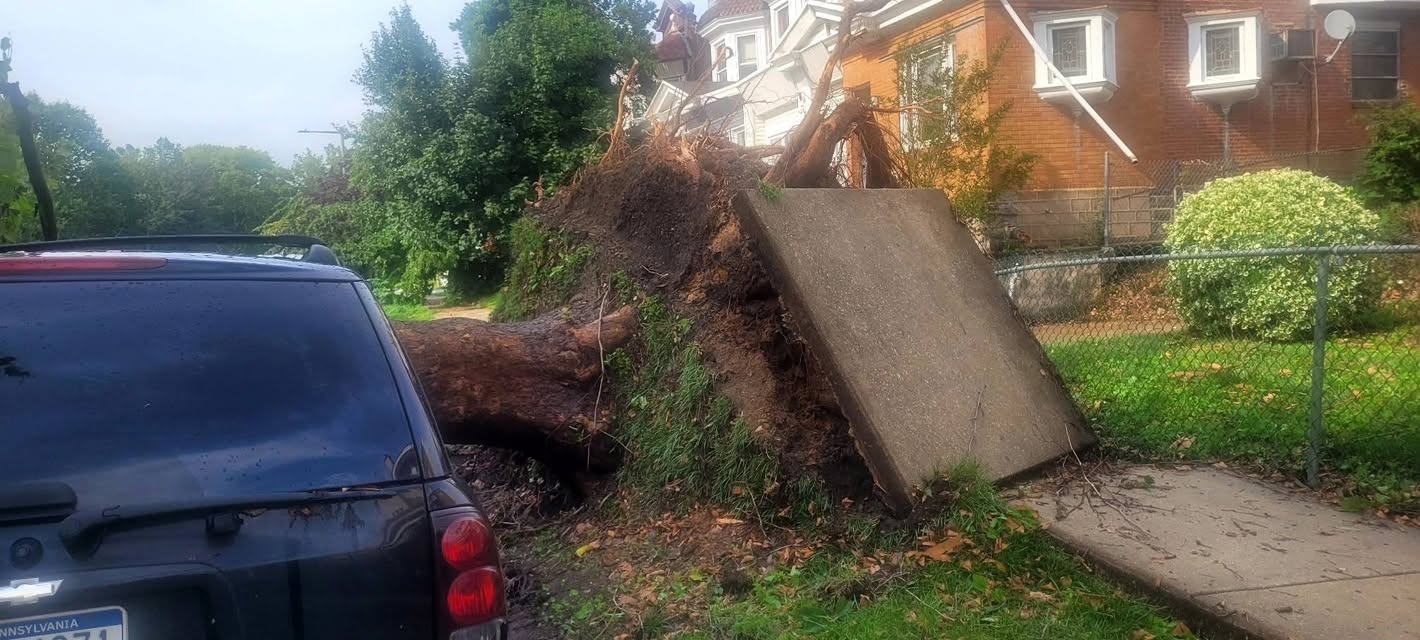
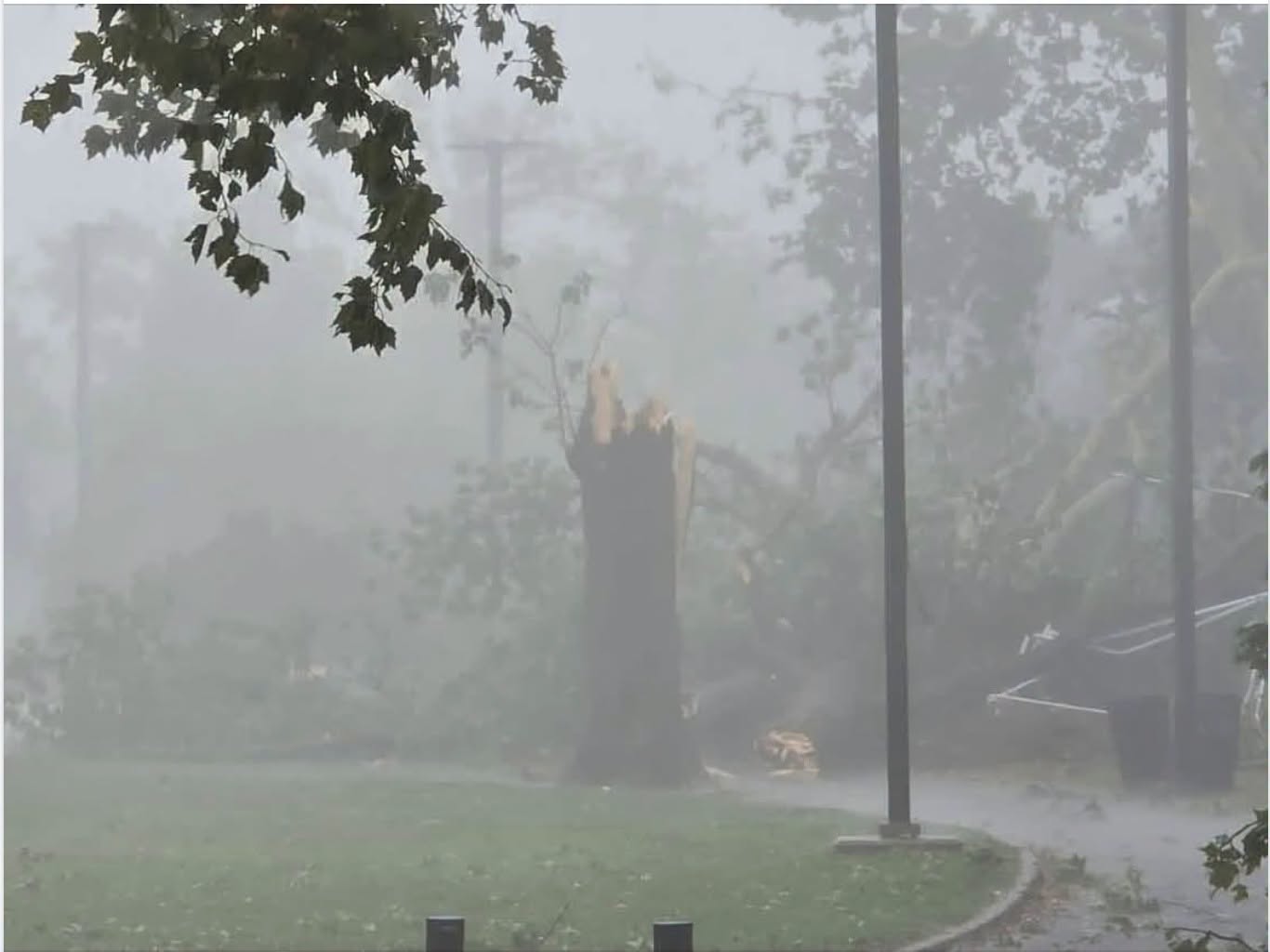






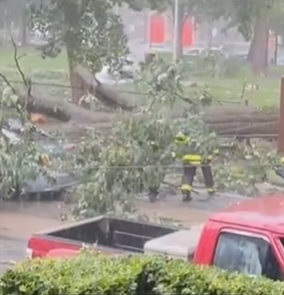



On July 11, 2026, four distinct microbursts struck the Philadelphia region simultaneously. Wind gusts approaching 70 mph and torrential downpours ripped roofs from buildings, caused structural collapses, toppled trees, and brought down power lines across the area.
Microbursts develop rapidly and are notoriously difficult to predict. Because they can strike with little or no warning, meteorologists stress that a Severe Thunderstorm Warning should be treated with the same urgency as a Tornado Warning.
A microburst is a sudden, intense downdraft of air within a thunderstorm that plunges toward the ground and then spreads outward violently in all directions.
Although these events typically last only 5 to 15 minutes and usually affect an area less than 2.5 miles (4 km) wide, they can produce straight-line winds exceeding 100 mph (160 km/h)—strong enough to cause damage comparable to an EF-1 tornado.
A powerful thunderstorm updraft lifts and suspends a massive core of rain and hail high within the storm.
Dry air enters the storm, causing raindrops to evaporate. Evaporation rapidly cools the surrounding air, making it denser and heavier.
The storm’s updraft weakens and can no longer support the heavy precipitation core and the increasingly dense, chilled air.
The entire mass plunges toward Earth like an atmospheric water balloon. Upon reaching the ground, the air has nowhere to go except outward, exploding horizontally and generating destructive straight-line winds.
       [ Thunderstorm Cloud ]
          /      |      \
         /   DOWNDRAFT   \
        v       |         v
                |
================|================
<-- ← WIND ←  IMPACT  → WIND → -->
Explodes outwardWet microbursts are accompanied by blinding rainfall, torrential downpours, and flash flooding. They are particularly common during hot, humid summer conditions.
Dry microbursts occur when precipitation evaporates before reaching the ground. Little or no rain is observed, leaving behind what can seem like an invisible explosion of wind.
| Feature | Microburst | Tornado |
|---|---|---|
| Wind Movement | Straight-line winds spreading outward | Rotational winds spiraling inward and upward |
| Damage Pattern | Debris falls in one direction or fans outward | Debris is twisted, swirled, and chaotic |
| Size & Duration | Usually under 2.5 miles wide and lasts 5–15 minutes | Varying widths; can track for miles and last over an hour |
Climate change is expected to increase both the frequency and intensity of microbursts by altering the amount of energy and moisture available in the atmosphere.
Because microbursts are highly localized events, they are difficult to isolate within traditional global climate models. However, advances in atmospheric physics, high-resolution modeling, and machine-learning analyses increasingly indicate that a warming climate is creating environments more favorable for severe thunderstorm downbursts.
For every 1°C (1.8°F) of warming, the atmosphere can hold approximately 7% more water vapor.
The Impact:
This additional moisture acts as high-octane fuel for thunderstorms, allowing larger precipitation cores to develop. When these heavier cores collapse, they can generate faster and more powerful downdrafts.
Meteorologists use Downdraft Convective Available Potential Energy (DCAPE) to estimate the potential strength of descending air within a storm.
The Impact:
Climate simulations project increases in average DCAPE across many regions under continued greenhouse warming. Higher DCAPE generally translates into stronger descending air and potentially higher straight-line wind speeds.
In many regions, warming temperatures create hotter and sometimes drier layers of air beneath thunderstorms.
The Impact:
As rain falls into these dry layers, evaporation accelerates. The resulting rapid cooling creates exceptionally dense air that sinks at high speed, intensifying both wet and dry microbursts.
The atmospheric ingredients that favor severe thunderstorm winds are changing geographically and seasonally.
The Impact:
Research suggests that environments conducive to severe downbursts are shifting poleward, exposing regions farther north to increased risks during seasons when microbursts were historically less common.
At their core, microbursts are extreme energy events.
Climate change represents an imbalance in Earth’s energy system. As the atmosphere and oceans accumulate additional heat, more energy becomes available to power thunderstorms and other forms of extreme weather.
The destructive potential of wind is highly nonlinear. Kinetic energy increases with the square of wind speed, meaning relatively small increases in velocity can produce disproportionately larger impacts. Consequently, modest increases in storm intensity can translate into dramatically greater damage to homes, infrastructure, forests, and electrical systems.
Microbursts are one example of how additional energy in the climate system can manifest as sudden, localized, and highly destructive weather extremes.
Microbursts remain among the most dangerous weather phenomena for aviation. A sudden downburst can rapidly alter an aircraft’s airspeed and lift during takeoff or landing, creating life-threatening conditions within seconds.
At the same time, stronger straight-line winds pose increasing challenges for power grids, transportation networks, communication systems, and urban infrastructure.
As the climate system continues to warm, understanding and preparing for these rapidly developing extreme energy events will become increasingly important for both public safety and infrastructure resilience.
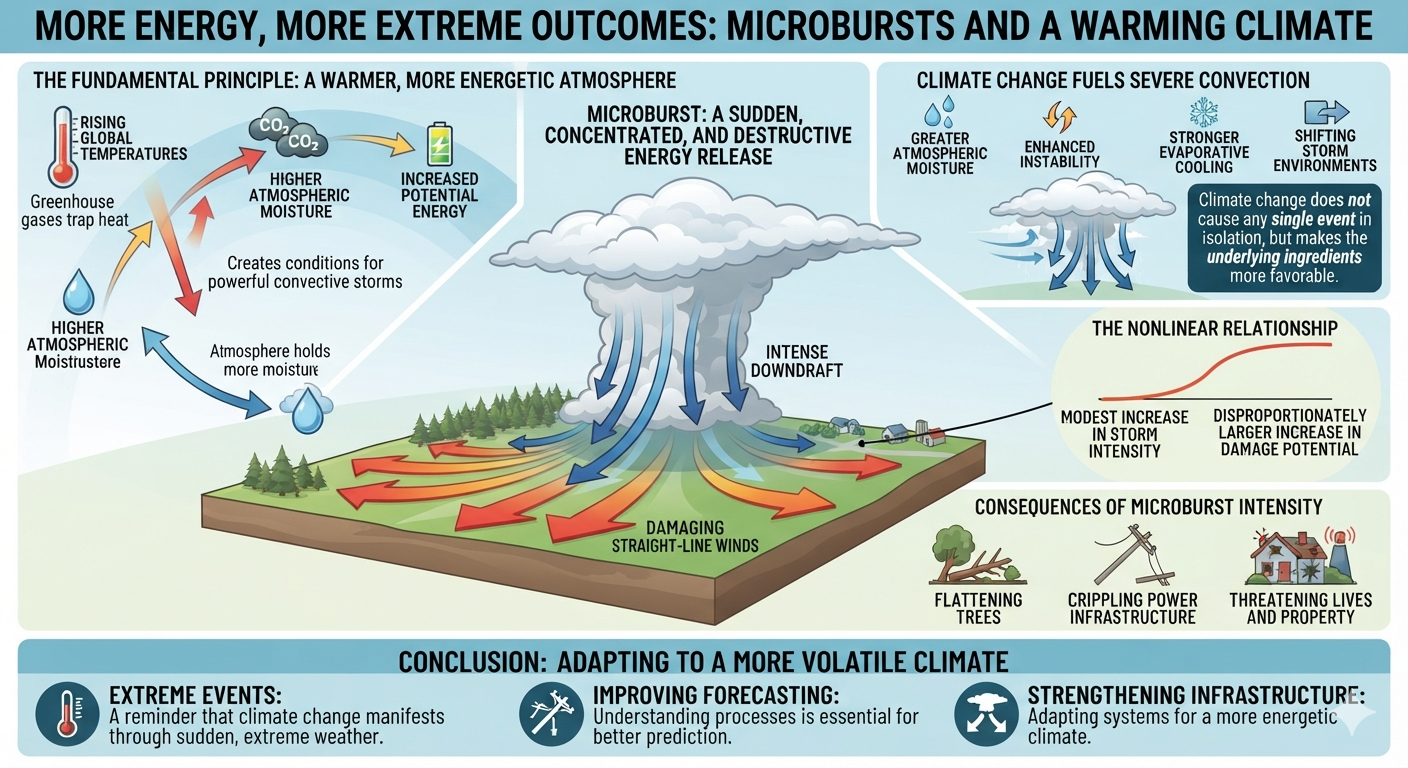
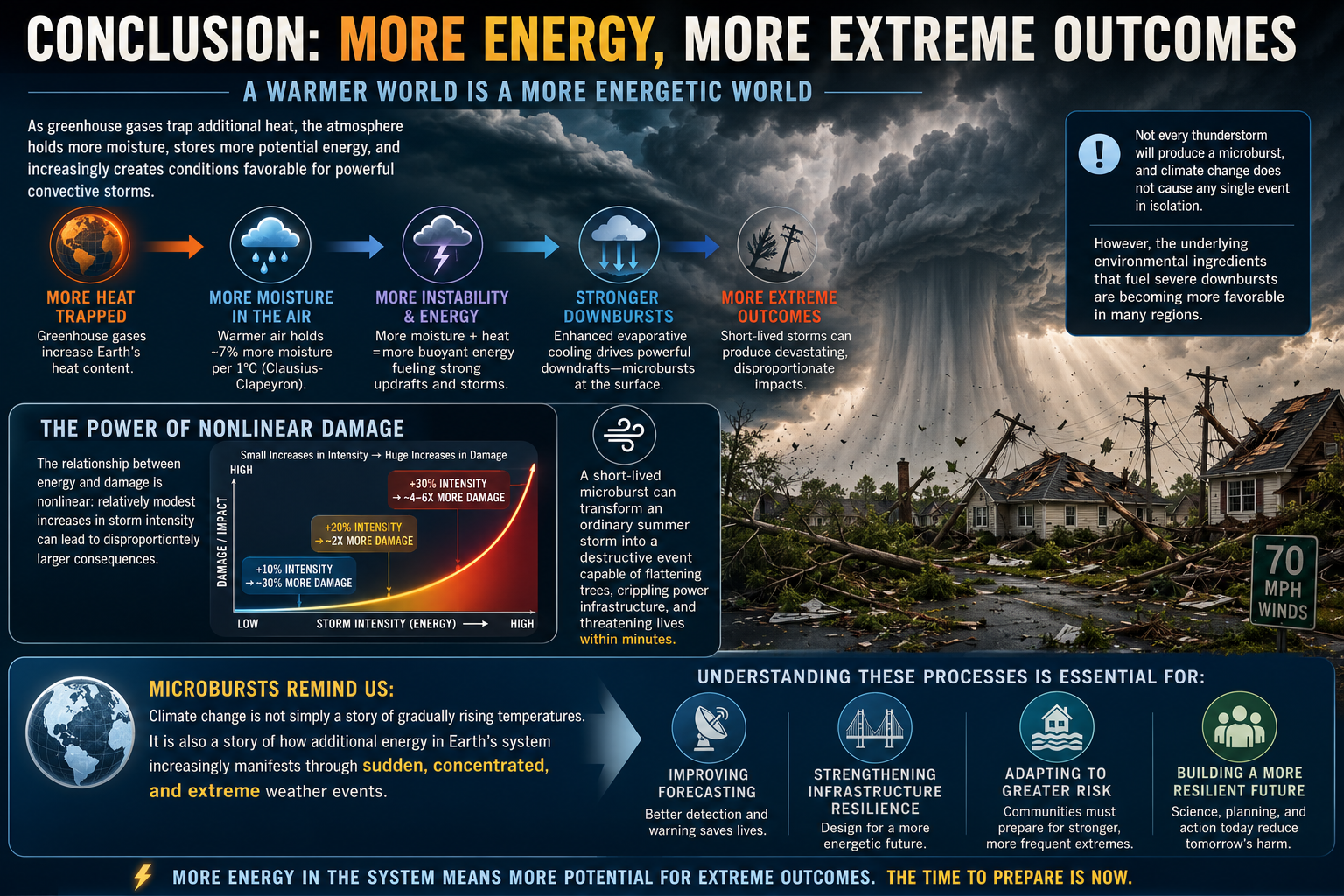
Microbursts illustrate a fundamental principle of climate physics: a warmer world is a more energetic world. As greenhouse gases trap additional heat, the atmosphere holds more moisture, stores more potential energy, and increasingly creates conditions favorable for powerful convective storms.
Not every thunderstorm will produce a microburst, and climate change does not cause any single event in isolation. However, the underlying environmental ingredients that fuel severe downbursts—greater atmospheric moisture, enhanced instability, stronger evaporative cooling, and shifting storm environments—are becoming more favorable in many regions.
Because the relationship between energy and damage is nonlinear, relatively modest increases in storm intensity can lead to disproportionately larger consequences. A short-lived microburst can transform an ordinary summer storm into a destructive event capable of flattening trees, crippling power infrastructure, and threatening lives within minutes.
Microbursts therefore serve as a reminder that climate change is not simply a story of gradually rising temperatures. It is also a story of how additional energy in Earth’s system increasingly manifests through sudden, concentrated, and extreme weather events. Understanding these processes is essential for improving forecasting, strengthening infrastructure resilience, and adapting to a climate system that is becoming progressively more volatile and energetic.